You know those days when the coffee has done its best, but your get-up-and-go still hasn't shown up? That's one reason NAD+ injections have become such a talking point. People are swapping stories about brighter mornings, clearer thinking and feeling more like themselves.
Some of those stories are genuinely exciting. But how does a substance involved in every cell become a wellness injection, and what can we actually say about the results? Pull up a chair.
What exactly is NAD+?
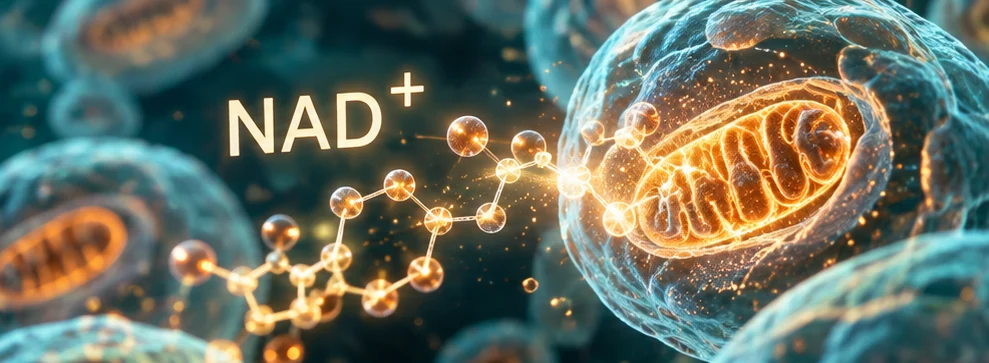
NAD+ is short for nicotinamide adenine dinucleotide. It's a natural coenzyme found in living cells. Among other jobs, it helps the chemical reactions that allow our bodies to use energy from food.
It's also involved in signalling and processes linked to cellular maintenance. That makes it fascinating to researchers investigating metabolism and ageing.
One small surprise: NAD+ isn't a peptide. It's a coenzyme, but it's a topic that fits right in at our café.
Why are people so interested in NAD+ injections?
It's easy to see the attraction. Who wouldn't be curious about feeling more energetic, keeping their mind sharp or recovering better after exercise? Add the growing conversation about healthy ageing, and NAD+ starts sounding rather intriguing.
Researchers have explored how NAD-related pathways change across different tissues and conditions. But a molecule being essential to normal cell function doesn't mean injecting more of it improves health. That's the question the clinical evidence needs to answer.
Energy, mental clarity and recovery: the big claims

Could they help you feel more energetic?
Energy is probably the most relatable claim. Some people report feeling noticeably more motivated or physically active. But controlled studies have not yet shown that NAD+ injections reliably improve everyday energy.

What about a sharper mind?
Better concentration, clearer thinking and less mental fog feature in positive personal accounts. They're worth listening to, but they are not the same as a controlled cognitive test.
Recovery and healthy ageing
Fitness communities are interested in whether NAD+ might support recovery. Longevity enthusiasts are curious about its links to ageing biology. Both are worthwhile research questions, neither is an established benefit of injectable NAD+.
NAD+ injections versus IV drips: what's the difference?

Online discussions can blur several quite different approaches. Intramuscular injections go into muscle; subcutaneous injections go beneath the skin; IV infusions deliver a substance into a vein. Each route affects how a substance enters the body.
Then there are oral NAD+ precursors, such as NR and NMN. Those aren't the same thing as an NAD+ injection. Results from supplement studies cannot simply be transferred to injections, and there isn't good comparative evidence showing that injections produce better wellness outcomes.
Around the Café: what are people experiencing?
Here's where the conversation becomes very human. In online discussions, some contributors describe a lift in energy, clearer thinking or more enthusiasm for exercise. Others report little change, unpleasant effects or a good first experience that didn't last.
For example, a contributor discussing intramuscular NAD+ described unusually high energy and lots of physical activity, while also making other lifestyle changes. Another older contributor described feeling mentally clearer after two injections. These are self-reported, unverified accounts; we can't tell whether NAD+ caused the changes.
We don't know how common these experiences are, or how many people never post because nothing happened. That's why we welcome both the excitement and the uncertainty.
What does human research actually show?
Research into NAD biology is substantial. Research proving that NAD+ injections improve energy, focus or longevity is not.
A 2026 systematic review examined preclinical and clinical evidence on NAD-related interventions. Human trials of oral precursors could show changes in NAD-related measurements, but results for meaningful health outcomes were inconsistent. The review did not identify eligible clinical-outcome trials establishing the anti-ageing or wellness effects of intravenous or intramuscular NAD+ itself.
The useful distinction: Changing a blood marker isn't the same as showing that somebody feels better, thinks more clearly or lives longer. Those outcomes need properly controlled human trials.
What about animal studies?
Experiments investigating NAD pathways have helped scientists ask important questions about metabolism and ageing. They don't prove that injecting NAD+ improves human health. We'd love to see the interesting biological ideas put to the test in well-designed clinical studies.
Side effects, safety and UK questions
Because NAD+ is naturally present in the body, it's tempting to assume injections must be harmless. Unfortunately, that doesn't follow. Injection-site problems, contamination, reactions to a formulation and complications of administration all matter.
People have reported unpleasant symptoms during NAD-related treatments, and long-term safety data for injectable NAD+ used for general wellness are limited. Reports about IV infusions shouldn't automatically be treated as evidence about injections into muscle or beneath the skin.
In the UK, an injectable product being advertised or offered doesn't necessarily mean it has been authorised as a medicine for the advertised purpose. The Advertising Standards Authority expects suitable evidence for health claims made about IV wellness services. Product-specific licensing and promotional claims require careful checking.
Peptide Cafe doesn't provide dosing, sourcing or self-injection instructions. Anyone considering an injectable treatment should discuss the risks, evidence and regulatory status with an appropriately qualified healthcare professional.

Guinea Pig Gary Has His Say 🐹☕
Real conversations, told with enthusiasm.
Well, I have been absolutely buzzing reading some of these NAD+ conversations! Not because anybody has discovered a magic injection, but because the enthusiasm in some of these first-hand reports is impossible to miss.
First, the fitness enthusiast. One poster discussing intramuscular NAD+ described a burst of energy, a brilliant mood and a remarkably active spell involving exercise. Padel, weights, cardio, what a week to be feeling on top form! They also changed other parts of their routine, so we can't credit the injections alone. But I can certainly understand why that experience made them smile.
Then, the 65-year-old describing renewed clarity. After two injections, this contributor reported feeling more energetic and mentally switched on. I love that kind of story: not a grand scientific claim, just somebody delighted to notice a difference in their everyday life.
And a third account, from somebody who had been dealing with fatigue. This person described little happening at first, followed by a striking sense of improved energy and clearer thinking after subsequent injections. For someone who says they've spent years feeling exhausted, imagine how welcome that would feel.
I'm cheering on the people who say they've had a good experience. And I'm cheering on the scientists who might one day tell us why some people report a change and others don't. What a fascinating mystery to unravel! 🐹☕
- Fitness and energy account — public online discussion, February 2025 (original post link requires editorial verification)
- Older contributor reporting mental clarity — public online discussion, October 2026 (original post link requires editorial verification)
- Fatigue and energy account — public online discussion, August 2026 (original post link requires editorial verification)
Guinea Pig Gary is a fictional editorial character, not someone who has used NAD+. These are paraphrases of reported public experiences, not verified testimonials or clinical evidence.
☕ The Peptide Cafe Perspective
Why the conversation about NAD+ deserves curiosity and better answers.
Of all the wellness conversations taking place right now, NAD+ has one of the most interesting starting points: this isn't an obscure substance that researchers hope the body might recognise. It's already part of the workings of our cells.
That's exciting. It gives the discussion a genuine biological foundation, even if the claims about injections are still waiting for clinical proof.
The science is worth getting excited about
NAD+ participates in the reactions that allow cells to manage energy. It is also involved in pathways linked with cellular stress and maintenance. Scientists are exploring how these systems change with age and what that might mean for health.
We find that work enormously interesting. Understanding the body's everyday chemistry can lead to discoveries nobody could have predicted at the outset.
But we want to keep two ideas separate: NAD+ is vital to normal biology, and injecting NAD+ has not been shown to make healthy people more energetic or younger.
The stories make the questions feel real
Behind the headlines are people describing what matters to them: getting through the day with more energy, thinking clearly at work, feeling able to exercise or simply enjoying a better week.
Some accounts are full of excitement. We think those voices deserve to be heard, provided readers can see where the stories came from and understand that they're not controlled evidence.
And the mixed accounts matter just as much. They remind us that expectations, other treatments, natural changes and countless personal circumstances can influence what somebody notices.
Imagine what a good trial could tell us
Here's what we'd love to see: carefully controlled human research that measures the outcomes people actually care about. Not just changes in a laboratory value, but fatigue, concentration, recovery and quality of life.
Would a genuine effect appear? Would it depend on the person or the route of administration? Would the results be smaller than the online enthusiasm suggests? Could there be risks that short-term reports have missed?
Those are worthwhile questions, whatever the answers turn out to be.
And healthy ageing?
Research into NAD-related biology may teach us more about the way cells respond to stress and age. That's an exciting scientific possibility in its own right. It isn't evidence that an injection can turn back the clock and we don't need to pretend otherwise to appreciate the research.
✨ Why NAD+ is worth watching
- Its central role in cell biologyNAD+ is involved in energy metabolism and other essential processes.
- Positive experiences people want to discussPersonal accounts raise useful questions about energy and clarity, though they don't prove causation.
- A clear need for human injection trialsWell-designed studies could test whether the claims translate into repeatable benefits.
- A bigger conversation about ageingNAD-related pathways remain an active area of biological research.
Our verdict? NAD+ is a genuinely fascinating part of human biology, and the stories surrounding injections give researchers some very practical questions to investigate. We're enthusiastic about learning what careful trials might reveal and just as interested in making sure the answers are reliable.
Science, experiences, claims and curiosity are all welcome at the Peptide Cafe. ☕
Original research & further reading
- 2026 systematic review — NAD+ supplementation, ageing and wellness evidence (bibliographic details to verify before publishing)
- UK ASA — Intravenous nutritional therapy advertising guidance
Peptide Cafe is an independent UK educational publication. We explore research and personal experiences without selling peptides, recommending suppliers or encouraging self-experimentation. This guide is not personal medical advice. Editorial verification of Gary's source posts and product-specific UK status is required before publication.