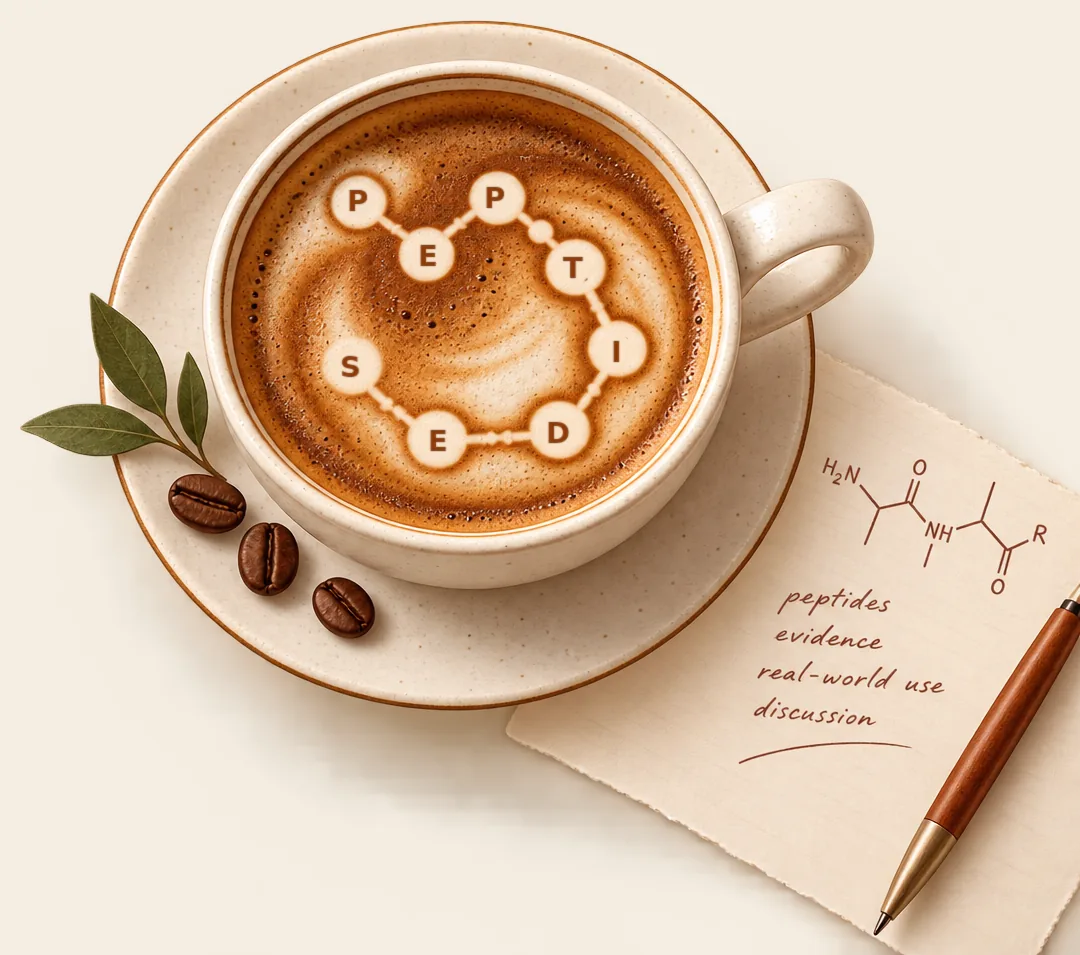
There's something wonderful about the body's ability to repair itself. A broken bone gradually rebuilds. An injured muscle begins a remarkable recovery process. Even stubborn tendons have their own intricate healing mechanisms.
Now imagine a peptide that appears to influence some of those processes in experiments. That's part of what makes BPC-157 such an interesting subject. Researchers have reported encouraging findings in animal studies, small human reports have described improvements in certain symptoms, and people continue to share their own recovery experiences.
What is behind the excitement? Pull up a chair. Let's explore.
What exactly is BPC-157?
BPC-157 stands for Body Protection Compound-157. It's a synthetic chain of 15 amino acids, developed in connection with research into protective substances associated with gastric juice. The experimental peptide isn't an established naturally occurring human medicine.
Researchers have investigated it in relation to tissue repair, blood-vessel signalling, inflammatory pathways and gastrointestinal injury. The breadth of that research is intriguing, although most of the experimental work has involved animals or laboratory models.
Why are people so interested?
If you've ever dealt with a slow-healing tendon or an injury that interrupted your daily routine, you'll understand the appeal. Recovery isn't only about pain disappearing; it's about movement, strength and confidence returning.
BPC-157 is discussed in connection with tendons, ligaments, muscles, joints, bones and the gut. These are research interests and reported claims, rather than established medical uses. But the experimental findings help explain why so many people are curious.
The tendon research that sparked the conversation
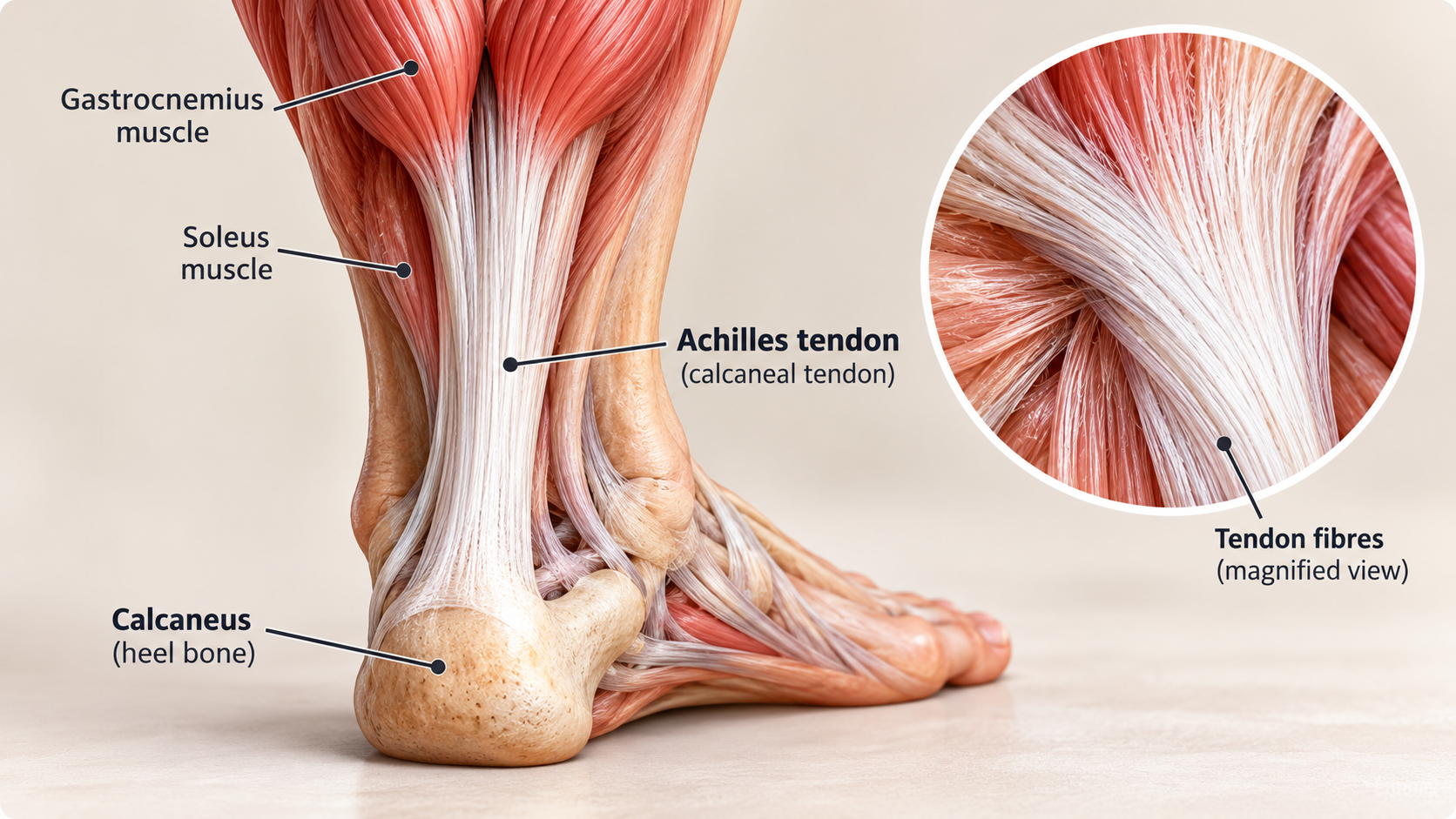
In a 2003 rat Achilles tendon study, researchers reported improvements in measures of tendon healing, including tissue organisation, mechanical strength and function. That's particularly interesting because a tendon needs to do more than feel better: its fibres must withstand force again.
A 2006 experiment explored tendon-to-bone healing in rats and also reported favourable results. These experiments give researchers worthwhile questions to pursue, even though surgically injured animal tendons aren't the same as human sports injuries.
Muscle, ligament and bone research
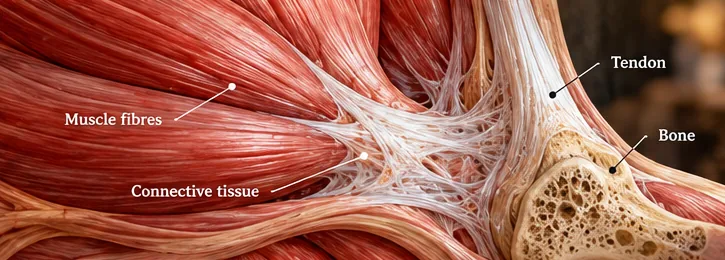
The research extends beyond tendons. A 2008 rat muscle-crush experiment reported improvements in several recovery measures. Other investigators have explored ligament healing and bone defects in animal models.
Could BPC-157 influence biological processes shared by different forms of tissue repair? It's a fascinating possibility to investigate. These animal findings, however, don't establish that the peptide accelerates human fracture or injury healing.
Around the Café: What are people experiencing?

Often, curiosity starts with somebody's story. People discussing BPC-157 online describe perceived changes in joint discomfort, mobility or recovery from injuries. Some believe their progress was unusually quick. Others describe little noticeable difference or unwanted effects.
Evidence classification: Anecdotal evidence only.
Imagine someone returning for a fracture follow-up and hearing that their healing looks better than expected. If they'd been using BPC-157, it's understandable that they might wonder whether it contributed. The experience may be genuine and meaningful; establishing what caused it is a separate question.
That's why we'd want to know what was medically observed, the timeline, what else was involved and how recovery ordinarily varies. Those details make a story richer, not less interesting.
Editorial note: These are themes discussed in peptide communities, not verified individual testimonials or a representative survey. We don't yet know whether positive experiences outnumber negative ones, and we won't invent or selectively present accounts as proof.
What have human studies reported?
Knee pain: 11 of 12 reported improvement
In a 2021 retrospective report, 11 of 12 respondents who received BPC-157 alone reported significant improvement in knee pain. It's an encouraging observation, especially for anyone familiar with persistent knee problems.
There was no randomised comparison group, however, and pain relief wasn't the same as demonstrating faster tissue repair. The report raises a worthwhile question for better-controlled research.
Bladder symptoms: another intriguing report
A 2024 pilot report described 12 women with interstitial cystitis. Ten reportedly experienced complete symptom resolution and two substantial improvement. Those are striking reported outcomes, but the study didn't include a comparison group, so the specific contribution of BPC-157 can't be isolated.
These studies show that published human observations exist, including positive findings. What we still need are larger, independent clinical trials to discover whether benefits can be reproduced reliably.
How might BPC-157 influence healing?
Researchers have explored possible effects on blood-vessel signalling, cell movement, collagen organisation and inflammatory pathways. These processes all play roles in how tissues respond to injury.
It's an exciting set of biological questions. But a mechanism observed in a laboratory isn't, by itself, proof that a treatment improves recovery in people.
BPC-157 half-life: how long does it stay in the body?
Here's a question that comes up surprisingly often in peptide conversations: how long does BPC-157 actually remain in the body?
A peptide's elimination half-life is the time it takes for its measured concentration in the blood to decrease by half. That is not necessarily the same as how long any biological effects might last.
What have animal studies measured?
In a 2022 pharmacokinetic study, researchers measured the intact BPC-157 peptide in rats and beagle dogs. After a single intravenous administration, they reported an average plasma elimination half-life of 15.2 minutes in rats and approximately 5.3 minutes in dogs.
Researchers also studied intramuscular administration and found that the measured half-life varied with the species and experimental conditions. The peptide was broken down into smaller fragments, with excretion of peptide-derived material involving urine and bile.
There is a fascinating detail here: radioactive material from labelled BPC-157 remained measurable much longer in some rat experiments. But this included breakdown products; it should not be confused with intact BPC-157 remaining in the bloodstream for that whole period.
Do we know the half-life in humans?
Not reliably. A 2025 pilot report involved only two adults receiving intravenous BPC-157. Such preliminary research does not establish a dependable half-life for people generally, or show how the peptide behaves after other routes of administration.
Does a short half-life mean short-lived effects?
Not necessarily. A substance might leave circulating blood quickly while processes it affects continue afterwards. But for BPC-157, whether any proposed repair-related effects persist in humans, and for how long, remains uncertain.
The key takeaway: BPC-157 was eliminated rapidly from blood in rat and dog experiments, but there is no well-established human half-life or proven duration of healing effects. Animal measurements should not be used to infer human dosing schedules.
Why is TB-500 often mentioned alongside BPC-157?
The two names often appear together in recovery discussions. Both are associated with research or claims involving tissue repair, but they are different peptides with different research histories.
There's an important distinction between TB-500 and the full-length thymosin beta-4 studied in some publications. Findings for one cannot automatically be assigned to the other, and robust human evidence hasn't established that combining TB-500 with BPC-157 improves healing. You can explore the research, experiences and safety questions in our TB-500 guide.
What about safety and UK status?
A 2025 pilot study observed two adults after intravenous BPC-157 and reported no adverse effects during its short monitoring period. That's a favourable observation, but two participants cannot establish wider or long-term safety.
Questions remain about immune reactions, longer-term effects and the purity of preparations outside regulated medicines systems. The US FDA has highlighted safety concerns in the context of compounding. BPC-157 is not an authorised medicine in the UK; supply and promotional claims may engage UK medicines law. It's also prohibited under applicable anti-doping rules.
Those questions deserve attention alongside the promising experiments. Understanding possible benefits and possible risks is part of following emerging research responsibly.

Guinea Pig Gary Has His Say 🐹☕
Real conversations, told with enthusiasm.
Oh, this is exactly the kind of recovery conversation that gets my whiskers twitching! I'm fascinated by the accounts from people who say they finally felt able to move more comfortably after months of frustrating injuries.
One public Reddit poster described struggling with a leg problem that had made long walks difficult. They said their walking improved after they began using BPC-157, and later described making progress with a physical therapist. What a wonderful outcome to hear about! They also had structured rehabilitation and eventually used other peptides, so no one can honestly say which factor was responsible.
Another poster recovering from Achilles rupture wrote about perceived improvements in an unrelated tennis-elbow problem while using multiple compounds. And in a discussion of tendon problems, a commenter enthusiastically credited a combination of BPC-157 and TB-500 with easing their elbow symptoms. I love hearing that sort of hope and excitement, especially when the person is talking about getting back to everyday movement or the gym.
These aren't my own medical experiences. I'm Guinea Pig Gary, the café's fictional enthusiast, and I'm sharing the positive side of genuine public conversations. The improvement belongs to the people who reported it. Whether BPC-157 caused it is a different question, and exactly why their stories deserve proper attention!
- Reddit: long-term leg and walking recovery account
- Reddit: Achilles injury and tennis-elbow account
- Reddit: tendon-recovery experiences and comparisons
Guinea Pig Gary is a fictional editorial character, not a person who used these substances. The linked posts are self-reported experiences, not verified testimonials or clinical evidence. References here do not endorse the products, suppliers or methods discussed in those posts.
☕ The Peptide Cafe Perspective
Why BPC-157 has become one of the most fascinating conversations in peptide research.
We think BPC-157 is an incredibly interesting peptide, and when you explore the research, it's easy to understand why so many people are excited about its potential.
The human body's ability to repair itself is extraordinary. Tendons recover, damaged muscles rebuild and complicated biological processes work together to restore injured tissues.
What makes BPC-157 especially intriguing is that researchers have investigated whether this small, 15-amino-acid peptide can influence some of those processes.
And some of the experimental findings are genuinely encouraging.
The research that really catches our attention
We find the tendon studies particularly fascinating.
In a 2003 experiment involving rats with injured Achilles tendons, researchers reported improvements in several measures of healing, including tissue organisation, mechanical strength and functional recovery.
That's exciting because successful tendon recovery isn't simply about reducing discomfort. Damaged tissue needs to regain the strength and structure required for movement.
Other animal investigations have reported favourable findings involving muscle injuries, ligaments and bone repair.
Taken together, these studies suggest that BPC-157 deserves serious scientific investigation across several areas of tissue biology.
Of course, these were animal experiments, not clinical trials proving that BPC-157 heals human injuries. But they provide intriguing reasons to ask what carefully controlled human studies might discover.
The early human findings are especially interesting
This is where our curiosity grows even stronger.
Published human reports, although small and preliminary, have described positive observations.
In a 2021 retrospective knee-pain report, 11 of 12 respondents who received BPC-157 alone reported significant improvement.
A 2024 pilot report involving 12 women with interstitial cystitis described complete symptom resolution in ten participants and substantial improvement in two others.
Those are striking reported outcomes, and we think they're worth discussing enthusiastically.
The important qualification is that these studies lacked controlled comparison groups. We cannot determine how much improvement was specifically caused by BPC-157.
Nevertheless, positive preliminary human observations give researchers questions worth pursuing in larger, properly controlled trials.
And what about all those recovery stories?
We love that peptide conversations aren't confined to laboratories and academic journals.
People discussing BPC-157 online describe experiences involving stubborn tendon problems, uncomfortable joints, frustrating injuries and perceived improvements in movement or recovery.
Some accounts are genuinely enthusiastic. People describe feeling more comfortable, becoming more mobile or finally making progress after a difficult period.
We can understand why those experiences generate such excitement.
For somebody struggling with an injury, even a modest improvement in everyday movement can be enormously meaningful.
We want those positive stories to have a place at Peptide Cafe.
We also recognise that improvements can occur naturally, through rehabilitation or through other treatments. Personal accounts cannot reliably establish whether BPC-157 itself caused the changes being described.
But these experiences help us understand what people hope future research will investigate.
Imagine the possibilities for future research
What excites us most is the opportunity to explore these encouraging early findings more thoroughly.
Could properly designed human trials reproduce some of the tendon-repair effects observed in animals?
Might researchers identify particular injuries or conditions where measurable improvements occur?
Could investigations into BPC-157 help scientists better understand biological pathways involved in tissue recovery?
And could future trials establish a clearer picture of its safety?
These are fascinating possibilities.
We aren't claiming that BPC-157 is a proven treatment for injuries. It isn't. But we absolutely believe the scientific questions surrounding it are worth exploring.
✨ What makes BPC-157 worth watching?
- Encouraging tendon and tissue researchAnimal studies have reported favourable findings across several experimental injury models.
- Positive preliminary human observationsSmall uncontrolled studies have reported encouraging symptom improvements that merit further testing.
- Enthusiastic real-world conversationsPositive accounts help identify the outcomes people care about, even though they cannot establish treatment effectiveness.
- Exciting future research opportunitiesControlled clinical trials could reveal whether the experimental findings translate into meaningful human benefits.
Our verdict? BPC-157 is one of the most intriguing peptides in experimental recovery research. Its encouraging animal findings, positive preliminary human observations and enthusiastic community discussions create a fascinating scientific story. There's plenty to investigate, and we're genuinely excited to see what future research discovers.
Science, experiences, claims and curiosity are all welcome at the Peptide Cafe. ☕
Original research & further reading
- 2003 — Rat Achilles tendon healing
- 2006 — Rat tendon-to-bone healing
- 2008 — Rat muscle-crush injury
- 1999 — Rabbit bone-defect research
- 2010 — Rat ligament healing
- 2021 — Human knee-pain report
- 2024 — Human interstitial-cystitis report
- 2022 — BPC-157 pharmacokinetics in rats and dogs (He et al.)
- 2025 — Two-person safety pilot
- 2025 — Orthopaedic sports-medicine systematic review
- FDA — Compounding safety concerns
Peptide Cafe is an independent UK educational publication. We explore research and personal experiences without selling peptides, recommending suppliers or encouraging self-experimentation. This guide is not personal medical advice.