
The recovery stories that made people curious
Behind the larger-than-life name are ordinary goals: lifting without shoulder pain, walking comfortably, getting back to sport and feeling that rehabilitation is finally moving forwards. Here are three encouraging public accounts describing use of both peptides. These are paraphrased first-person reports, not independently verified medical outcomes.
🏋️ A shoulder problem that had disrupted training for years
In a discussion about the Wolverine Stack, one contributor described a shoulder issue that had interfered with gym training for around three years. After using the combination, they reported being able to train normally again within several weeks. Their account also mentioned some pain returning temporarily before settling.
It's a striking story because the outcome wasn't simply “I feel better”. The writer connected the improvement to an activity they had struggled to do. But the account cannot tell us whether the combination, natural recovery or other factors made the difference.
🎾 Tennis elbow, knee tenderness and hip discomfort
Another contributor described several persistent problems, including tennis elbow, knee tenderness and hip discomfort. They reported considerable improvement after approximately two weeks with the combination. The same account discussed ongoing physiotherapy and exercise, which are important parts of the recovery story rather than details to leave out.
What makes this account interesting is the range of symptoms the writer described. What it cannot establish is whether any particular ingredient caused the reported changes.
💪 Returning to shoulder and chest pressing
A third contributor described shoulder pain lasting more than six months and later reported returning to pressing exercises without pain. They associated their progress with BPC-157 and TB-500, although the improvement unfolded over a period long enough for other influences to matter.
For someone who loves training, returning to a familiar movement can feel like an enormous milestone. It's understandable why accounts like this travel quickly through fitness communities.

Why put BPC-157 and TB-500 together?
The theory is straightforward and surprisingly interesting. Recovery isn't one biological switch. It involves inflammatory signalling, blood vessels, migrating cells, collagen and the gradual reorganisation of damaged tissue. Enthusiasts reason that compounds affecting different parts of those processes might complement one another.
BPC-157 is a synthetic peptide investigated in experimental models for effects on tissue repair, vascular signalling and cellular responses to injury. TB-500 is commonly described as a modified seven-amino-acid fragment associated with thymosin beta-4, a naturally occurring 43-amino-acid peptide involved in actin regulation and cell movement.
That makes the pairing an appealing research hypothesis: one candidate might influence repair signalling while another might influence how cells move and organise themselves. But two promising mechanisms do not automatically add up to a better treatment. The precise chemical identity of TB-500 also matters because much of the broader literature investigates full-length thymosin beta-4 rather than the shorter modified fragment.
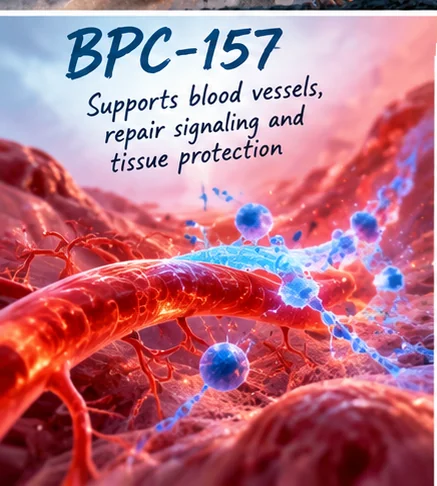
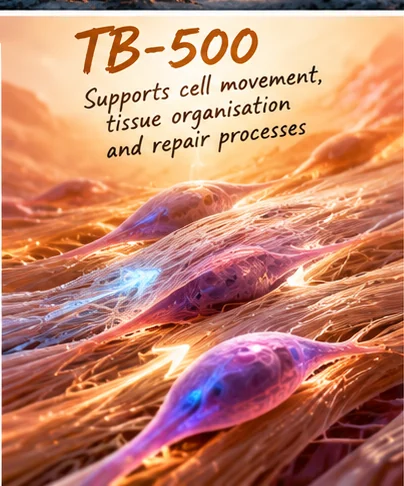
For deeper explanations of each compound, see our separate BPC-157 guide and TB-500 guide.
The research: Has anyone tested the combination?
A 2026 rat study asked the exact question
A paper published in 2026, Effects of BPC-157 and TB-500 on Achilles tendon healing in rats, compared BPC-157, TB-500, their combination and a control condition in a rat Achilles tendon repair model. It included 32 rats in four groups.
There were encouraging findings in individual treatment groups and certain tissue-structure measures. In particular, the researchers reported stronger tendon findings for TB-500 alone relative to control. The combination also showed improvements in some microscopic measures compared with control.
But here's the result that makes the study especially important: the researchers did not demonstrate an additional benefit from combining BPC-157 and TB-500 compared with using either separately.
That doesn't settle the question forever. It was a small animal experiment examining a particular injury and follow-up period. It does, however, directly test the popular synergy theory rather than simply assuming it.
Read the 2026 rat study on PubMed ↗
What earlier experiments contributed
Separate animal and laboratory studies have investigated BPC-157 in tendon and other tissue-repair models. Work on full-length thymosin beta-4 and certain related peptide sequences has also explored cell migration, angiogenesis and wound repair. These findings help explain why the two names became associated with recovery.
There is an important boundary: studies of full-length thymosin beta-4, unmodified fragments and N-acetylated TB-500 cannot all be treated as interchangeable evidence. Nor can favourable animal results establish clinical benefits in people.
What about human results?
One small retrospective case series, published in 2021, is particularly relevant. It reviewed patients receiving intra-articular injections for knee pain and included people who received BPC-157 alone and others who received BPC-157 alongside thymosin beta-4.
| Group | Patient-reported improvement | What it means |
|---|---|---|
| BPC-157 alone | 11 of 12 respondents | Encouraging self-reported knee-pain improvement |
| BPC-157 plus thymosin beta-4 | 3 of 4 respondents | Encouraging self-reported improvement, but not evidence of added benefit |
These are small numbers, and the study was not randomised or placebo-controlled. It did not establish that injured tissues healed faster. Crucially, the combined treatment involved thymosin beta-4, not necessarily the modified TB-500 fragment described in online stacks.
Still, this is worth discussing because it provides a published record of positive patient experiences rather than relying entirely on social media. The results are a reason to investigate further, not proof of effectiveness.
So what can we say about the Wolverine Stack?
We can say that people have shared detailed, enthusiastic accounts of improved comfort, movement and return to sport. We can say there are plausible biological reasons to study the combination. We can also say that a direct animal comparison has been published and that a small uncontrolled human case series involved BPC-157 with full-length thymosin beta-4.
We cannot yet say that the Wolverine Stack reliably heals human tendons, that it works better than either compound alone, or that its long-term safety is established. Those claims would require stronger clinical trials.
Safety and UK context, without the scare stories
Enthusiasm for a recovery idea is understandable, especially when an injury has affected everyday life. But neither BPC-157 nor TB-500 is an established, licensed UK treatment for tendon or ligament healing. Reliable human safety data for the combination are lacking, and online product identity and purity cannot be assumed.
Public accounts also include people reporting no noticeable improvement or unwanted symptoms. These reports are not verified adverse-event data, but they are a reminder that personal experiences vary. Athletes should also be aware of applicable anti-doping rules.
Peptide Cafe investigates the claims and science independently. We don't recommend suppliers, purchasing, dosing or self-experimentation.

Guinea Pig Gary Has His Say 🐹☕
There's plenty to get excited about in these stories!
Now THIS is the sort of conversation that gets my whiskers twitching! Not because we've proved a miracle cure, but because people are describing the very things that matter when recovery feels stuck: training again, moving without the same discomfort and feeling more like themselves.
Take that shoulder story. After years of trouble in the gym, the writer described getting back to normal training. THREE YEARS! Imagine how encouraging that must have felt. Then there's the person juggling tennis elbow, knee tenderness and hip discomfort, who described a big change in how those areas felt. And another who talked about finally returning to shoulder and chest pressing.
Those are three different public accounts, and I love that they're specific. Not just “fantastic stuff”, but real activities and setbacks people cared about. Of course, we can't know from a Reddit post what caused the improvement. Physiotherapy, time and other factors are part of the picture.
But here's my view: don't lose sight of the hopeful human stories just because the science hasn't caught up yet. They give researchers something worth asking about. And when somebody says they can finally do something they love again, I reckon that deserves a little celebration. ☕🐹
- Longstanding shoulder problem and gym training
- Tennis elbow, knee and hip report
- Shoulder recovery and pressing exercises
Gary is a fictional Peptide Cafe editorial character. He has not used these compounds. The linked reports are unverified, self-selected accounts, not proof of efficacy or endorsements of methods mentioned by their authors.
☕ The Peptide Cafe Perspective
Big recovery hopes, fascinating biology and questions worth investigating.
We can see why the Wolverine Stack has captured so much attention. Recovery can be painfully slow, and the idea of two compounds potentially influencing different aspects of repair is naturally compelling. Add people describing a return to training or more comfortable movement, and it's no surprise the conversation has grown.
What excites us most is how specific the stories are
People aren't only discussing an abstract promise of “healing”. They're talking about pressing weights again, dealing with tennis elbow and getting back to ordinary activities. Those details help reveal the questions that meaningful clinical research ought to answer.
We want those hopeful accounts to be heard. We also want them described accurately, without turning personal experiences into a claim that the combination has been proved to work.
There's a genuine scientific idea underneath the nickname
Research into BPC-157 and thymosin beta-4-related biology touches on cell signalling, movement, blood vessels and tissue organisation. That's an intriguing set of questions, and it provides a sensible reason to investigate whether two different experimental compounds could have complementary effects.
The 2026 rat study is particularly welcome because it tested the pairing directly. Although it didn't demonstrate an extra benefit from combining them, it moved the conversation beyond guesswork. That's what progress in research looks like: testing an exciting idea and learning what the results actually show.
Imagine a really good human trial
We'd love to see a properly controlled study that measures pain, physical function, imaging outcomes and adverse events, with enough participants to compare the combination against each component and standard care. That would help distinguish genuine treatment effects from the natural course of recovery.
Perhaps future trials will reveal benefits in particular circumstances. Perhaps they won't. Either result would be valuable, because people deserve better answers than confident marketing or dismissive headlines.
✨ Why this combination is worth watching
- Meaningful reported outcomesPublic accounts describe returning to activities that matter to people.
- Interesting repair biologyThe proposed mechanisms raise questions that can be tested experimentally.
- A direct combination studyThe 2026 rat experiment gives the conversation a concrete research finding, even though it did not establish synergy.
- Room for better human evidenceWell-designed clinical trials could tell us whether the enthusiasm translates into measurable benefits.
Our verdict? The Wolverine Stack is a fascinating meeting point between enthusiastic recovery stories and early-stage science. We're genuinely interested in what people report and in the biological ideas behind the combination. The next exciting chapter would be rigorous human research that tells us whether the promise holds up.
Science, experiences, claims and curiosity are all welcome at the Peptide Cafe. ☕
Research and original accounts
- Biçer and colleagues (2026). Effects of BPC-157 and TB-500 on Achilles tendon healing in rats. Direct experimental comparison of the combination and individual compounds.
- Intra-Articular Injection of BPC 157 for Multiple Types of Knee Pain (2021). Retrospective case series, including a small group receiving thymosin beta-4.
- Philp and colleagues (2003). Experimental thymosin beta-4 and related sequence wound-repair research.
- World Anti-Doping Agency. Prohibited list and current anti-doping guidance.
- Public Wolverine Stack shoulder account. Unverified first-person report.
- Public multiple-injury Wolverine Stack account. Unverified first-person report.
- Public BPC-157 and TB-500 shoulder account. Unverified first-person report.
Editorial note: Public forum accounts can change or disappear. Study descriptions and regulatory information should receive a final source check before publication.